

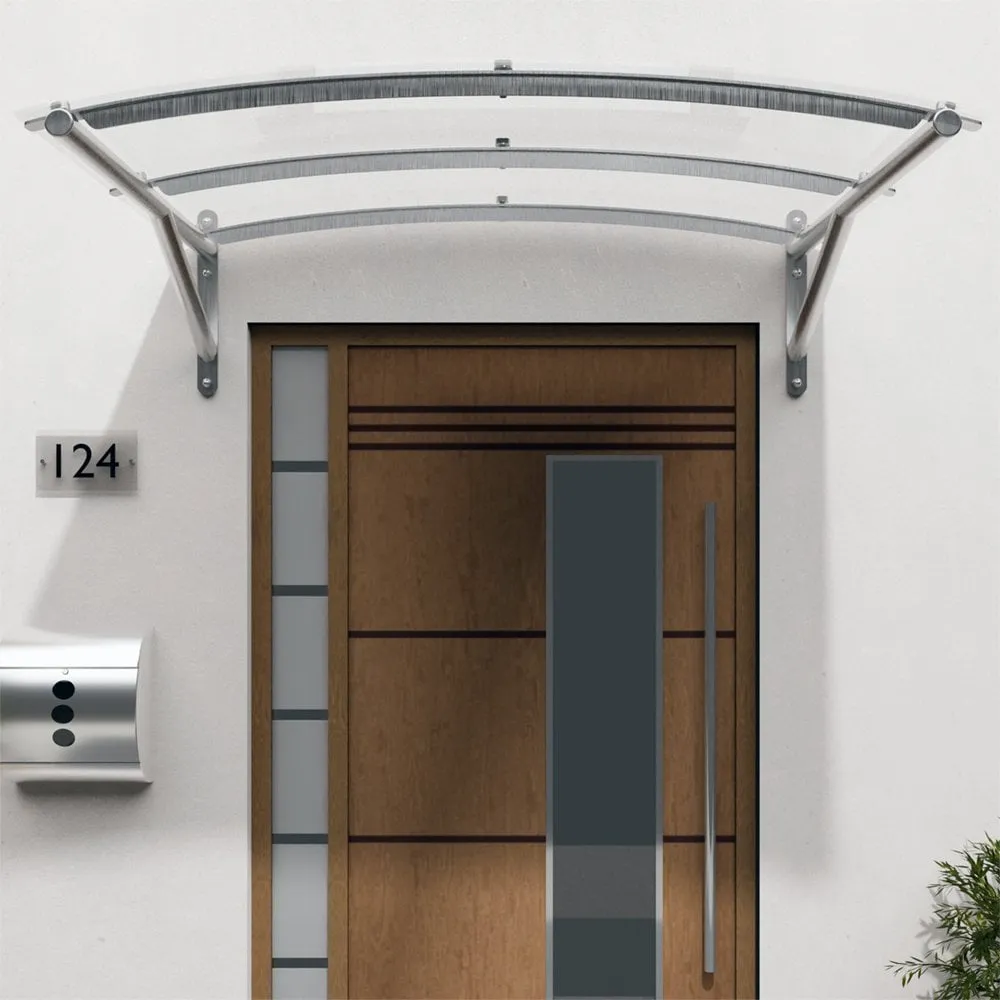
Curved Polycarbonate Door Canopy Type: D DDA Act Compliant
£1,052.86
inc VAT
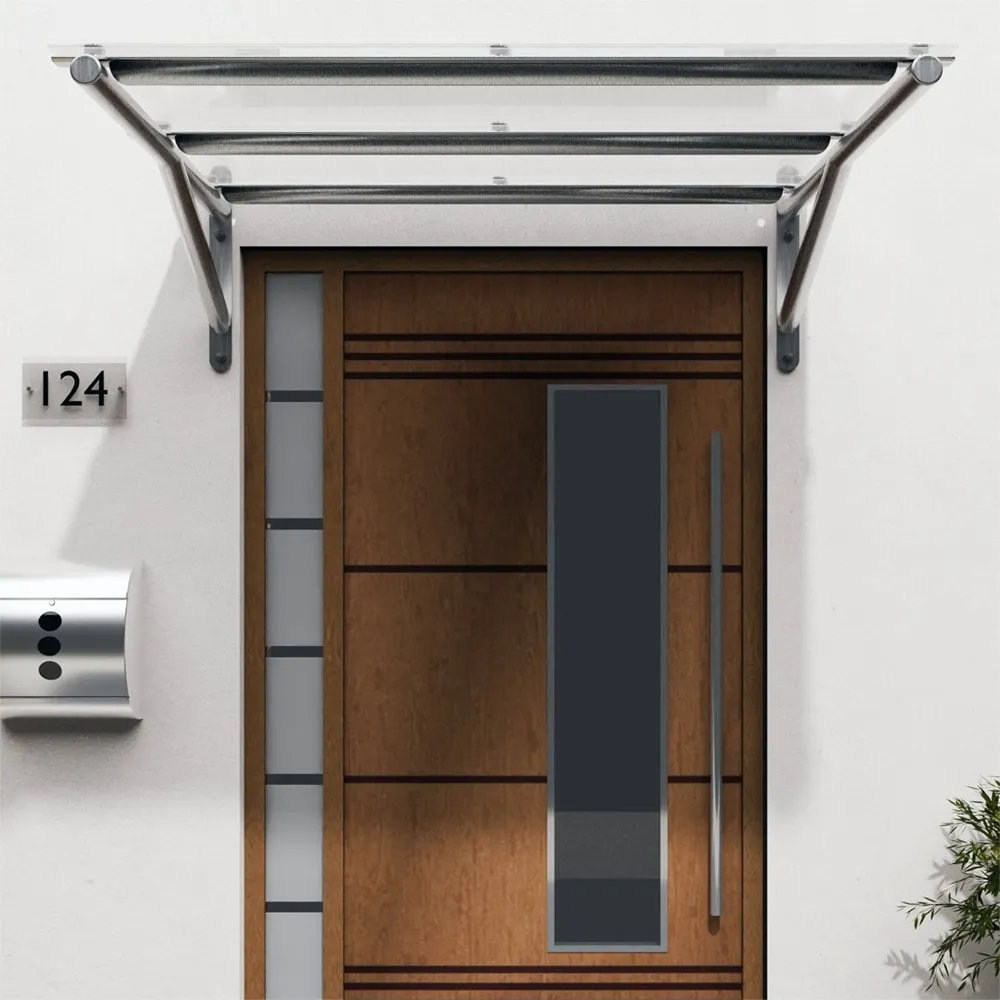
Our DDA polycarbonate canopies give accessible entrances deep, sheltered cover in a lightweight, maintenance-free material. At 1200mm deep, they leave room to approach and open the door out of the rain, whether you're in a wheelchair, using a mobility aid or pushing a buggy. Choose the curved Type A or the flat Type E, both made to measure in North Yorkshire. For a glass finish, see our DDA glass canopies, or the whole DDA range.
No products match those filters.
Sized for accessible entrances
Both models are 1500mm wide and 1200mm deep, giving a sheltered space in front of the door for people who need more room or more time to get inside.
Curved or flat
The Type A has a curved profile that sheds water cleanly; the Type E is flat for a more modern, minimal line.
Light, tough and UV-stable
Polycarbonate is shatter-resistant, much lighter than glass and UV-stable, so it stays clear in sunlight. It needs very little maintenance.
Part of a compliant entrance
A canopy is one part of an accessible entrance. Approach routes, door widths, thresholds and landings all play a part too, so check the full requirements for your building with your designer or building control.